There would be an Oyster case, a metal bracelet, perhaps a Cyclops over the date. Add a rotating bezel and the imaginary watch becomes a Submariner or GMT-Master II. Replace it with a fluted bezel and Jubilee bracelet and it starts looking like a Datejust.
Rolex has become so successful at repeating and refining these forms that they now feel inseparable from the brand.
That creates a curious problem when encountering an Oysterquartz.
The case is angular. The bracelet flows directly into it. The seconds hand ticks once per second. Put the name on the dial aside for a moment and it violates several assumptions people make about what a Rolex is supposed to be.
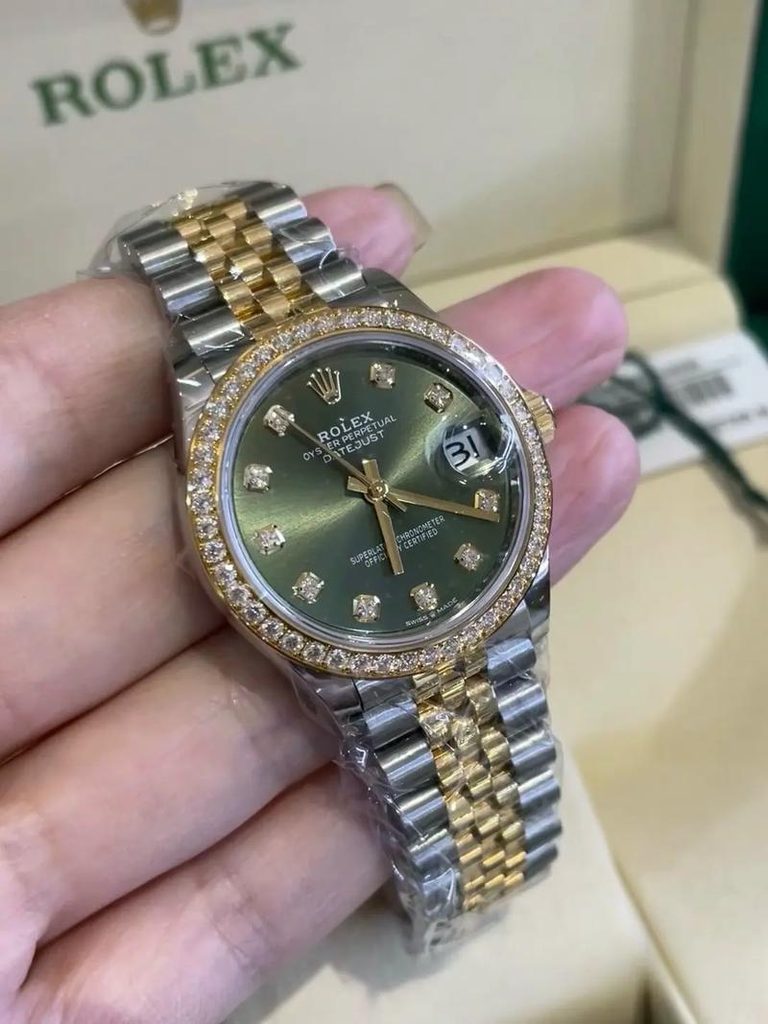
The Cellini creates the same confusion for different reasons. Some versions abandon the Oyster case and metal bracelet altogether. The Prince goes further still: rectangular case, manually wound movement, separate displays for the time and running seconds.
Fratello recently grouped these watches with the Yacht-Master and 34mm Oyster Perpetual as alternatives for collectors bored with the usual fake Rolex choices. That is a reasonable shopping argument.
But these watches become more interesting when they are treated not as alternatives to mainstream Rolex, but as evidence against our increasingly narrow definition of the brand.
Because the further back we look, the less unusual some of them become.
Rolex introduced the original Prince in 1928, long before the Submariner, GMT-Master or Daytona existed. Its elongated rectangular case and separated time and seconds displays belong to an entirely different period of wristwatch design. The large seconds register was useful enough for timing a pulse that the Prince became associated with the “doctor’s watch” nickname.
From today’s perspective, it barely looks like a Rolex.
Historically, that statement is backwards.
The Prince existed before most of the watches that later taught us what a Rolex should look like.
When Rolex revived the idea through the Cellini Prince in the 2000s, it did not simply put an old dial into a modern case. The revived watches used rectangular manually wound caliber 7040 movements. Christie’s records examples with decorated movements visible through transparent casebacks, including a 2005 yellow-gold watch measuring 28 by 35mm. Another white-gold ref. 5441 used a curved rectangular case and a display back.
Those details are startling only because Rolex later became so closely identified with automatic movements hidden behind solid Oyster casebacks.
The Prince reminds us that the modern Rolex stereotype is not the same thing as Rolex history.
The Oysterquartz was easier to dismiss than to understand
If the Prince predates the stereotype, the Oysterquartz actively contradicts it.
Rolex launched its in-house Oysterquartz family in 1977, using caliber 5035 for the Datejust and 5055 for the Day-Date. These were not inexpensive generic quartz movements placed inside Rolex cases. The movements were engineered to an unusually high standard, including temperature compensation, and later versions were submitted for chronometer certification.
Then there was the case.
Angular surfaces replaced the familiar flowing Oyster profile. The bracelet was integrated into the architecture rather than attached between conventional lugs. The result belonged unmistakably to the design climate of the 1970s.
For decades, that made the Oysterquartz easy to treat as a historical detour.
Even its seconds hand worked against it. The old shortcut that “a real Rolex doesn’t tick” is particularly ironic when applied to a watch that Rolex itself spent years developing.
The market did not exactly prove Rolex wrong. Oysterquartz sales were modest, and the family remained far less visible than its mechanical Datejust and Day-Date relatives. An often-repeated estimate puts total production around 25,000 pieces, although Rolex does not publish the figure and it should therefore remain an estimate rather than be treated as an official production total.
What happened later is more revealing.
Collectors began reconsidering the watch precisely because it was different. Owner communities that once struggled to find much discussion about Oysterquartz now sustain long-running dedicated threads. The same characteristics that made the watch awkward in the traditional Rolex narrative – quartz movement, angular case, integrated bracelet – became reasons to own one.
And then Rolex launched the Land-Dweller.
The connection is difficult to miss. The 2025 Land-Dweller revived the integrated case-and-bracelet architecture associated with the mechanical ref. 1530 and subsequent Oysterquartz family, modernizing it through the Flat Jubilee bracelet and an entirely new mechanical platform.
Suddenly, the Oysterquartz no longer looked like a road Rolex had abandoned.
It looked like a road the company had returned to fifty years later.
That does not make an Oysterquartz a proto-Land-Dweller, nor does it retroactively prove that the 1977 design was misunderstood genius.
It does something more useful.
It demonstrates that “doesn’t look like a Rolex” can be a temporary judgment.
The definition of Rolex can eventually move toward the watch.
Cellini presents almost the opposite case.
Nothing about it has recently been rehabilitated by becoming the blueprint for a blockbuster sports watch.
That is precisely why it is useful.
For years, Rolex Forums discussions about Cellini have contained variations of the same question: why does nobody talk about these watches?
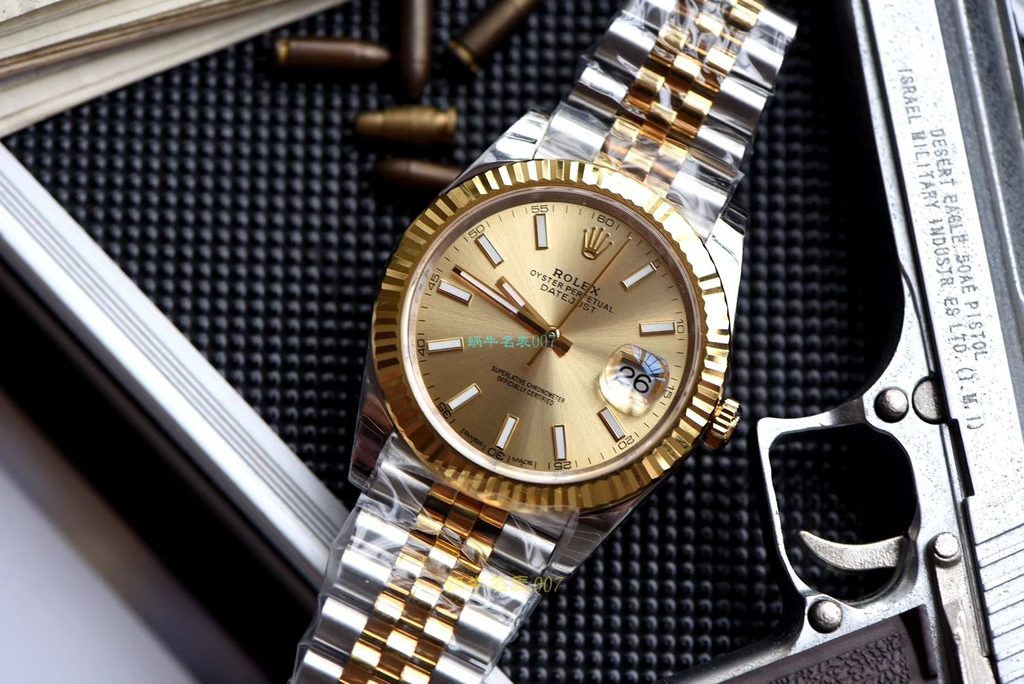
The responses reveal the problem more clearly than sales figures could.
Some owners genuinely admire them. Others say that if they wanted a traditional dress watch, they would rather buy from Jaeger-LeCoultre, Zenith or another manufacturer with a stronger reputation in that category. Some point to leather straps, lower water resistance and the mismatch between elegant dress-watch proportions and the rugged image normally associated with Rolex.
The interesting part is that very few of those criticisms mean the Cellini fails to function as a dress watch.
It can fail instead because it functions as the wrong kind of Rolex.
That distinction matters.
Rolex’s reputation became so heavily concentrated around the Oyster concept that moving away from it also removed some of the qualities buyers specifically came to Rolex to obtain. A slim precious-metal watch on leather might be attractive, but once the familiar Oyster architecture disappears, the buyer is suddenly comparing Rolex against brands whose identities were built around dress watches.
Cellini therefore exposes the limit of brand strength.
A famous name does not transfer equally well into every category.
Sometimes the very thing that makes a watch interesting to an enthusiast – “I didn’t know Rolex made something like this” – is evidence of why it struggled to become central to the catalog.
That is a more complicated story than calling the Cellini underrated.
Perhaps the market understood it perfectly well and simply preferred Rolex when Rolex behaved like the version of Rolex people already valued.
And then there is the watch that looks almost too normal
The 34mm Oyster Perpetual seems misplaced beside the Oysterquartz, Cellini and Prince.
It is round.
It uses an Oyster case and Oyster bracelet.
It is automatic.
The current ref. 124200 offers 100 meters of water resistance, Rolex caliber 2232, approximately 55 hours of power reserve and the company’s Superlative Chronometer certification.
There is nothing eccentric about it.
Its difference comes from subtraction.
At 34mm, with no date, no rotating bezel and no complication beyond hours, minutes and seconds, it removes many of the visual signals through which contemporary Rolex announces itself.
That makes it useful in a different way.
The Oysterquartz asks how far Rolex can change its architecture and remain Rolex.
The OP34 asks how much Rolex can remove before only the architecture remains.
And in 2026, even that story has become less straightforward. Rolex now offers the replica Rolex Oyster Perpetual 34 not only in Oystersteel but also in 18 kt yellow gold. The basic concept remains extraordinarily simple while its material position in the catalog has expanded.
So calling the OP34 an “entry-level Rolex” no longer fully explains it.
Nor does calling it an unconventional Rolex.
It may actually be one of the most concentrated expressions of the formula: waterproof Oyster case, automatic Perpetual movement, legible dial, metal bracelet, very little else.
If it feels unusual today, that says as much about the growth of Rolex sports-watch culture as it does about the watch.
The Yacht-Master complicates the picture one more time.
It looks familiar enough to be mistaken for a softer Submariner, but that comparison has always been slightly unfair.
Rolex launched the Yacht-Master in 1992. The current family still uses a bidirectional 60-minute bezel rather than the Submariner’s unidirectional dive bezel, and Rolex explicitly positions the model around sailing rather than diving.
The distinction is not merely technical.
The original ref. 16628 arrived in full 18 kt yellow gold.
That is a revealing starting point for a supposedly professional Rolex.
The Submariner’s mythology begins with underwater utility and accumulates luxury later. The Yacht-Master was comfortable admitting luxury from the beginning.
Its purpose was never to outperform the Submariner at being a dive watch.
Yet that is often the comparison imposed on it because the two watches share enough visual vocabulary to invite it.
This is another consequence of a narrow Rolex stereotype: unfamiliar models are judged according to whichever famous Rolex they most resemble.
The Yacht-Master becomes a less capable Submariner.
The Cellini becomes a Rolex that lacks Oyster toughness.
The Oysterquartz becomes a Datejust with the “wrong” movement.
The Prince becomes a Rolex that does not look like Rolex.
Each comparison begins by assuming the mainstream model is the standard and the unusual watch must justify its deviations.
Reverse the question and the watches become more informative.
What was Rolex trying to do that the Submariner, Datejust or Daytona could not?
For the Yacht-Master, the answer includes a deliberately more luxurious interpretation of a nautical sports watch.
For the Cellini, it was traditional dress-watch territory outside the Oyster formula.
For the Oysterquartz, it was precision through electronic regulation combined with a radically different case architecture.
For the Prince, it was a rectangular watchmaking tradition that predates Rolex’s modern sports identity.
None needs to defeat the Submariner to justify existing.
They are solving different problems.
A strange Rolex can reveal more than a famous one
There is a temptation in collecting to turn obscurity into virtue.
Once the obvious watches become expensive or ubiquitous, enthusiasts start hunting for the forgotten reference, the discontinued line or the watch that supposedly only “real collectors” understand.
That can become just another form of status seeking.
Not every unpopular Rolex was secretly better.
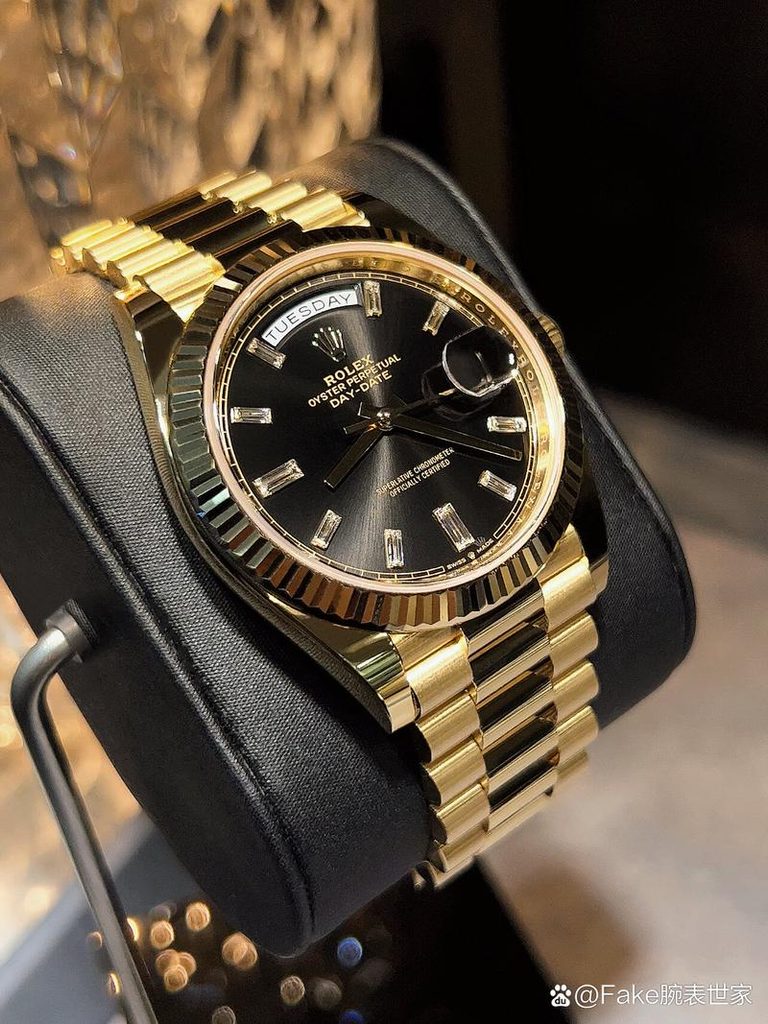
The Cellini’s weak position among Rolex enthusiasts has rational explanations. The Oysterquartz raises genuine questions for a buyer about servicing an unusual discontinued electronic movement; even owner discussions show that service availability is something prospective buyers continue to investigate. The 34mm Oyster Perpetual will simply be too small for some wrists or tastes. The Yacht-Master’s identity remains less immediately legible than the Submariner’s.
Being unusual does not eliminate those compromises.
What these watches offer instead is perspective.
Look only at the Submariner, GMT-Master II, Daytona and Datejust, and Rolex appears almost pathologically consistent.
Look at the Prince, Oysterquartz and Cellini, and the history becomes messier.
Rolex made rectangular watches.
Rolex made manually wound replica watches with visible decorated movements.
Rolex spent decades selling quartz watches.
Rolex experimented with integrated bracelets long before the Land-Dweller.
Rolex maintained an entire dress-watch family outside the conventional Oyster identity.
Some experiments endured. Others disappeared. One design language vanished for decades and then unexpectedly returned.
That history makes the famous Rolex models more interesting, not less.
It shows that the visual consistency we associate with the brand was not inevitable. It was the result of certain ideas surviving, selling and becoming culturally dominant while others moved to the edges.
Perhaps that is the better reason to look outside the Rolex box.
Not because an Oysterquartz or Prince proves that the obvious Rolexes are boring.
But because the watches that failed to become stereotypes show us how the stereotype was built.