The Rolex Watches That Make More Sense Once You Forget What a Rolex Should Look Like

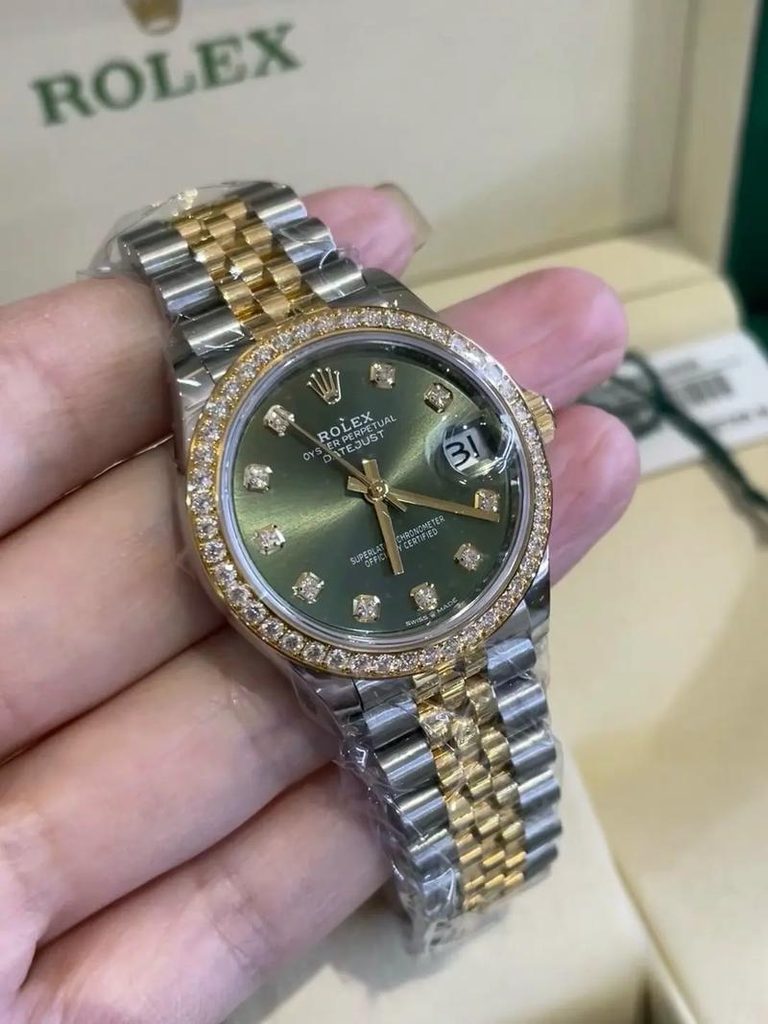
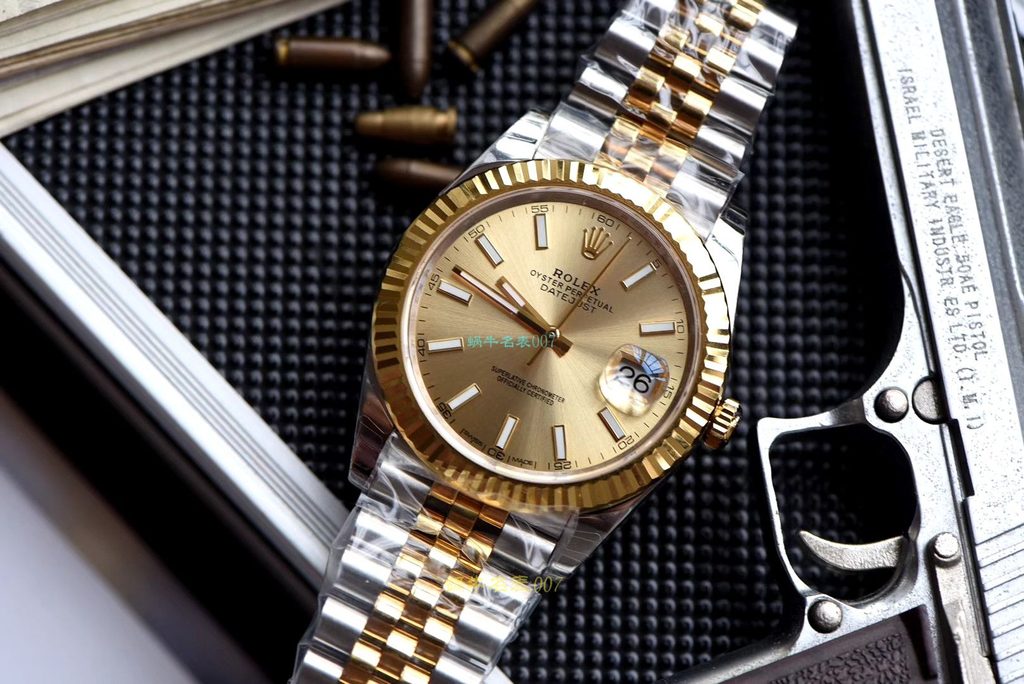
There would be an Oyster case, a metal bracelet, perhaps a Cyclops over the date. Add a rotating bezel and the imaginary watch becomes a Submariner or GMT-Master II. Replace it with a fluted bezel and Jubilee bracelet and it starts looking like a Datejust.

Rolex has become so successful at repeating and refining these forms that they now feel inseparable from the brand.

That creates a curious problem when encountering an Oysterquartz.

The case is angular. The bracelet flows directly into it. The seconds hand ticks once per second. Put the name on the dial aside for a moment and it violates several assumptions people make about what a Rolex is supposed to be.
The Cellini creates the same confusion for different reasons. Some versions abandon the Oyster case and metal bracelet altogether. The Prince goes further still: rectangular case, manually wound movement, separate displays for the time and running seconds.

Fratello recently grouped these watches with the Yacht-Master and 34mm Oyster Perpetual as alternatives for collectors bored with the usual fake Rolex choices. That is a reasonable shopping argument.

But these watches become more interesting when they are treated not as alternatives to mainstream Rolex, but as evidence against our increasingly narrow definition of the brand.

Because the further back we look, the less unusual some of them become.

Rolex introduced the original Prince in 1928, long before the Submariner, GMT-Master or Daytona existed. Its elongated rectangular case and separated time and seconds displays belong to an entirely different period of wristwatch design. The large seconds register was useful enough for timing a pulse that the Prince became associated with the “doctor’s watch” nickname.

From today’s perspective, it barely looks like a Rolex.

Historically, that statement is backwards.

The Prince existed before most of the watches that later taught us what a Rolex should look like.

When Rolex revived the idea through the Cellini Prince in the 2000s, it did not simply put an old dial into a modern case. The revived watches used rectangular manually wound caliber 7040 movements. Christie’s records examples with decorated movements visible through transparent casebacks, including a 2005 yellow-gold watch measuring 28 by 35mm. Another white-gold ref. 5441 used a curved rectangular case and a display back.

Those details are startling only because Rolex later became so closely identified with automatic movements hidden behind solid Oyster casebacks.

The Prince reminds us that the modern Rolex stereotype is not the same thing as Rolex history.

The Oysterquartz was easier to dismiss than to understand

If the Prince predates the stereotype, the Oysterquartz actively contradicts it.

Rolex launched its in-house Oysterquartz family in 1977, using caliber 5035 for the Datejust and 5055 for the Day-Date. These were not inexpensive generic quartz movements placed inside Rolex cases. The movements were engineered to an unusually high standard, including temperature compensation, and later versions were submitted for chronometer certification.

Then there was the case.

Angular surfaces replaced the familiar flowing Oyster profile. The bracelet was integrated into the architecture rather than attached between conventional lugs. The result belonged unmistakably to the design climate of the 1970s.

For decades, that made the Oysterquartz easy to treat as a historical detour.

Even its seconds hand worked against it. The old shortcut that “a real Rolex doesn’t tick” is particularly ironic when applied to a watch that Rolex itself spent years developing.

The market did not exactly prove Rolex wrong. Oysterquartz sales were modest, and the family remained far less visible than its mechanical Datejust and Day-Date relatives. An often-repeated estimate puts total production around 25,000 pieces, although Rolex does not publish the figure and it should therefore remain an estimate rather than be treated as an official production total.

What happened later is more revealing.

Collectors began reconsidering the watch precisely because it was different. Owner communities that once struggled to find much discussion about Oysterquartz now sustain long-running dedicated threads. The same characteristics that made the watch awkward in the traditional Rolex narrative – quartz movement, angular case, integrated bracelet – became reasons to own one.

And then Rolex launched the Land-Dweller.

The connection is difficult to miss. The 2025 Land-Dweller revived the integrated case-and-bracelet architecture associated with the mechanical ref. 1530 and subsequent Oysterquartz family, modernizing it through the Flat Jubilee bracelet and an entirely new mechanical platform.

Suddenly, the Oysterquartz no longer looked like a road Rolex had abandoned.

It looked like a road the company had returned to fifty years later.

That does not make an Oysterquartz a proto-Land-Dweller, nor does it retroactively prove that the 1977 design was misunderstood genius.

It does something more useful.

It demonstrates that “doesn’t look like a Rolex” can be a temporary judgment.

The definition of Rolex can eventually move toward the watch.

Cellini presents almost the opposite case.

Nothing about it has recently been rehabilitated by becoming the blueprint for a blockbuster sports watch.

That is precisely why it is useful.

For years, Rolex Forums discussions about Cellini have contained variations of the same question: why does nobody talk about these watches?
The responses reveal the problem more clearly than sales figures could.

Some owners genuinely admire them. Others say that if they wanted a traditional dress watch, they would rather buy from Jaeger-LeCoultre, Zenith or another manufacturer with a stronger reputation in that category. Some point to leather straps, lower water resistance and the mismatch between elegant dress-watch proportions and the rugged image normally associated with Rolex.

The interesting part is that very few of those criticisms mean the Cellini fails to function as a dress watch.

It can fail instead because it functions as the wrong kind of Rolex.

That distinction matters.

Rolex’s reputation became so heavily concentrated around the Oyster concept that moving away from it also removed some of the qualities buyers specifically came to Rolex to obtain. A slim precious-metal watch on leather might be attractive, but once the familiar Oyster architecture disappears, the buyer is suddenly comparing Rolex against brands whose identities were built around dress watches.

Cellini therefore exposes the limit of brand strength.

A famous name does not transfer equally well into every category.

Sometimes the very thing that makes a watch interesting to an enthusiast – “I didn’t know Rolex made something like this” – is evidence of why it struggled to become central to the catalog.

That is a more complicated story than calling the Cellini underrated.

Perhaps the market understood it perfectly well and simply preferred Rolex when Rolex behaved like the version of Rolex people already valued.

And then there is the watch that looks almost too normal

The 34mm Oyster Perpetual seems misplaced beside the Oysterquartz, Cellini and Prince.

It is round.

It uses an Oyster case and Oyster bracelet.

It is automatic.

The current ref. 124200 offers 100 meters of water resistance, Rolex caliber 2232, approximately 55 hours of power reserve and the company’s Superlative Chronometer certification.

There is nothing eccentric about it.

Its difference comes from subtraction.

At 34mm, with no date, no rotating bezel and no complication beyond hours, minutes and seconds, it removes many of the visual signals through which contemporary Rolex announces itself.

That makes it useful in a different way.

The Oysterquartz asks how far Rolex can change its architecture and remain Rolex.

The OP34 asks how much Rolex can remove before only the architecture remains.

And in 2026, even that story has become less straightforward. Rolex now offers the replica Rolex Oyster Perpetual 34 not only in Oystersteel but also in 18 kt yellow gold. The basic concept remains extraordinarily simple while its material position in the catalog has expanded.

So calling the OP34 an “entry-level Rolex” no longer fully explains it.

Nor does calling it an unconventional Rolex.

It may actually be one of the most concentrated expressions of the formula: waterproof Oyster case, automatic Perpetual movement, legible dial, metal bracelet, very little else.

If it feels unusual today, that says as much about the growth of Rolex sports-watch culture as it does about the watch.

The Yacht-Master complicates the picture one more time.

It looks familiar enough to be mistaken for a softer Submariner, but that comparison has always been slightly unfair.

Rolex launched the Yacht-Master in 1992. The current family still uses a bidirectional 60-minute bezel rather than the Submariner’s unidirectional dive bezel, and Rolex explicitly positions the model around sailing rather than diving.

The distinction is not merely technical.

The original ref. 16628 arrived in full 18 kt yellow gold.

That is a revealing starting point for a supposedly professional Rolex.

The Submariner’s mythology begins with underwater utility and accumulates luxury later. The Yacht-Master was comfortable admitting luxury from the beginning.

Its purpose was never to outperform the Submariner at being a dive watch.

Yet that is often the comparison imposed on it because the two watches share enough visual vocabulary to invite it.

This is another consequence of a narrow Rolex stereotype: unfamiliar models are judged according to whichever famous Rolex they most resemble.

The Yacht-Master becomes a less capable Submariner.

The Cellini becomes a Rolex that lacks Oyster toughness.

The Oysterquartz becomes a Datejust with the “wrong” movement.

The Prince becomes a Rolex that does not look like Rolex.

Each comparison begins by assuming the mainstream model is the standard and the unusual watch must justify its deviations.

Reverse the question and the watches become more informative.

What was Rolex trying to do that the Submariner, Datejust or Daytona could not?

For the Yacht-Master, the answer includes a deliberately more luxurious interpretation of a nautical sports watch.

For the Cellini, it was traditional dress-watch territory outside the Oyster formula.

For the Oysterquartz, it was precision through electronic regulation combined with a radically different case architecture.

For the Prince, it was a rectangular watchmaking tradition that predates Rolex’s modern sports identity.

None needs to defeat the Submariner to justify existing.

They are solving different problems.

A strange Rolex can reveal more than a famous one

There is a temptation in collecting to turn obscurity into virtue.

Once the obvious watches become expensive or ubiquitous, enthusiasts start hunting for the forgotten reference, the discontinued line or the watch that supposedly only “real collectors” understand.

That can become just another form of status seeking.

Not every unpopular Rolex was secretly better.
The Cellini’s weak position among Rolex enthusiasts has rational explanations. The Oysterquartz raises genuine questions for a buyer about servicing an unusual discontinued electronic movement; even owner discussions show that service availability is something prospective buyers continue to investigate. The 34mm Oyster Perpetual will simply be too small for some wrists or tastes. The Yacht-Master’s identity remains less immediately legible than the Submariner’s.

Being unusual does not eliminate those compromises.

What these watches offer instead is perspective.

Look only at the Submariner, GMT-Master II, Daytona and Datejust, and Rolex appears almost pathologically consistent.

Look at the Prince, Oysterquartz and Cellini, and the history becomes messier.

Rolex made rectangular watches.

Rolex made manually wound replica watches with visible decorated movements.

Rolex spent decades selling quartz watches.

Rolex experimented with integrated bracelets long before the Land-Dweller.

Rolex maintained an entire dress-watch family outside the conventional Oyster identity.

Some experiments endured. Others disappeared. One design language vanished for decades and then unexpectedly returned.

That history makes the famous Rolex models more interesting, not less.

It shows that the visual consistency we associate with the brand was not inevitable. It was the result of certain ideas surviving, selling and becoming culturally dominant while others moved to the edges.

Perhaps that is the better reason to look outside the Rolex box.

Not because an Oysterquartz or Prince proves that the obvious Rolexes are boring.

But because the watches that failed to become stereotypes show us how the stereotype was built.

Inside the Evolution of the Rolex GMT-Master II – and the Forgotten Milgauss 1019

Few debates in modern Rolex collecting carry as much weight as the GMT-Master II “Pepsi” versus “Batgirl.” Both sit on the same 126710 generation foundation, both share the Caliber 3285, and both wear the Jubilee bracelet with ease. Yet on the wrist, they couldn’t feel more different.

One leans into heritage and aviation romance. The other feels like it was built for today’s traveler who wants discretion without losing presence. Choosing between them is less about specs and more about personality.

The Heritage Icon: GMT-Master II “Pepsi” (126710BLRO)
The “Pepsi” is the watch most people picture when they hear GMT-Master. Its red-and-blue bezel traces back to the original 1954 GMT-Master, created for Pan American World Airways pilots navigating long-haul flights across time zones. That origin still defines how the watch is perceived today – functional, yes, but also deeply tied to the golden age of aviation.

When Rolex reintroduced the steel Pepsi in 2018 on a Jubilee bracelet, demand surged almost immediately. Waiting lists followed, as they often do, but in this case the reaction felt almost predictable. It wasn’t just nostalgia – it was recognition.

The defining feature is, of course, the Cerachrom bezel. Producing the bi-color red and blue ceramic isn’t straightforward; each half requires separate treatment and multiple firing processes to achieve stable coloration. The result isn’t just technical complexity but subtle variation in how the colors behave under different lighting conditions. In daylight, it feels crisp and almost playful. Under softer indoor light, it becomes deeper and more restrained.

This is where the Pepsi’s character really shows. It’s not trying to be subtle. It carries history on its sleeve and expects the wearer to appreciate it.

The Modern Contender: GMT-Master II “Batgirl” (126710BLNR)
It evolved from the original black-and-blue “Batman” GMT, but the shift to the Jubilee bracelet softened its character significantly. That change alone altered how the watch sits in Rolex’s lineup. It stopped feeling purely tool-like and started leaning into everyday versatility.

The black-and-blue Cerachrom bezel is less theatrical than the Pepsi’s color split. The black portion blends into the dial almost seamlessly, which makes the blue half stand out in a quieter, more controlled way. It doesn’t announce itself across a room, but it rewards attention up close.

In practice, that makes it an easy watch to live with. It disappears under a cuff, works in formal settings without feeling out of place, and still carries enough visual interest to avoid being boring. It’s the GMT you wear when you don’t want to think too hard about what you’re wearing – but still care about what it says.

Shared Engineering, Different Personalities
Both models run on Rolex’s Caliber 3285, offering around 70 hours of power reserve. The Chronergy escapement and Parachrom hairspring give both watches strong resistance to magnetic fields and temperature variation – features that matter more in theory than in daily life, but still reinforce their “modern Rolex” identity.

On paper, there’s little separation. In reality, the difference is emotional rather than mechanical.

The Jubilee Effect
The return of the Jubilee bracelet to the replica GMT-Master II line was more significant than it first appeared.

Historically, GMT models were associated with the Oyster bracelet – sporty, direct, and utilitarian. The Jubilee changed the equation. It introduced more visual texture, more light play, and a softer wrist presence that shifted the watch away from pure tool territory.

On both the Pepsi and Batgirl, the bracelet plays a quiet but important role. It reduces visual weight, improves comfort over long wear, and gives the case a slightly dressier character without undermining its functionality. It’s part of why these references feel less like instruments and more like modern luxury objects that still happen to track time zones.

Which One Actually Wins?
The answer depends less on technical differences and more on how you approach watches.

The Pepsi is the emotional choice. It’s louder, more historically charged, and instantly recognizable. It carries the kind of visual identity that tends to define a collection rather than blend into one.

The Batgirl is the practical choice. It’s more restrained, easier to integrate into daily wear, and arguably more adaptable across different settings. It doesn’t rely on nostalgia to justify its presence.

Neither is objectively better. They simply occupy different ends of the same idea.

A Different Kind of Rolex: The Milgauss 1019
While modern collectors argue over bezel colors, the Rolex Milgauss 1019 sits in an entirely different category – one defined not by aesthetics or travel romance, but by scientific necessity.

Produced from 1960 to 1988, the 1019 represents Rolex at its most restrained. It abandoned the visual drama of earlier Milgauss references in favor of a clean, almost clinical design. At the time, that restraint worked against it commercially. Today, it’s exactly what makes it so compelling.

Built for a Problem Few People Had
The core issue was magnetism. In environments filled with electrical equipment, laboratory instruments, and early nuclear research systems, magnetic fields could disrupt a mechanical watch movement by affecting the hairspring.

Rolex’s solution was elegantly industrial: a soft-iron inner cage surrounding the movement, effectively creating a Faraday-style shield. Combined with a modified Caliber 1580 and anti-magnetic components, the watch could withstand magnetic exposure up to roughly 1,000 gauss.

It wasn’t flashy engineering. It was practical engineering taken seriously.

The CERN Connection and the “Lumeless” Dial
Standard luminous materials of the era relied on tritium, which – while relatively safe for wearers – interfered with sensitive scientific instruments. At CERN, that interference wasn’t acceptable.

Rolex responded by producing so-called “CERN dials,” stripped of luminous material entirely. The result was a stark, almost austere dial layout with black-painted markers and hands. Some versions simply read “SWISS” at the bottom, marking the absence of tritium.

These non-luminous variants are now among the most sought-after Milgauss references. Their appeal lies not in decoration, but in absence.

Design That Refused to Compete
Compared to contemporaries like the fake Rolex Submariner or GMT-Master, the 1019 looks almost hesitant. No rotating bezel, no sporty markings – just a smooth 38mm Oyster case and a polished bezel that feels more dress watch than tool watch.

Even the signature lightning-bolt seconds hand from earlier Milgauss models was removed, replaced by a simple red arrow tip. The overall effect is minimal, but not in a modern design sense. It’s minimal because everything unnecessary was already removed.

That decision is exactly why the watch struggled commercially when it was new. It didn’t compete for attention. It didn’t try to.

Why It Matters Today
The irony is that what once made the 1019 difficult to sell is what now defines its value. It wasn’t designed to impress collectors decades later. It was built for a narrow, highly technical purpose – and that purity is what makes it compelling today.

In many ways, the Milgauss 1019 feels closer to an engineering tool than a luxury object. And that distinction is exactly why it stands apart in the Rolex vintage landscape.

The GMT-Master II Pepsi and Batgirl represent two sides of modern Rolex: heritage-driven expression versus understated versatility.

The Milgauss 1019 sits outside that conversation entirely. It doesn’t compete – it simply exists, shaped by a problem most watches were never meant to solve.

The 3D Printed Rolex Homage That Defies Wrist Wear

The worlds of horology and 3D printing share a natural kinship, attracting enthusiasts fascinated by intricate mechanics and tangible creation. While functional, wearable 3D printed watches remain on the horizon, the technology continually sparks inventive horological projects. A striking example emerges from hobbyist Franc Falco, who meticulously designed and fabricated a functioning desk clock: a staggering 300% scale homage to his personal Rolex Submariner.

Driven by the challenge of replicating his cherished dive watch through 3D printing, Falco embarked on this ambitious endeavor. He generously shares the complete plans on Thingiverse.com, a hub for printable projects. These files include schematics for every component (excluding the inexpensive quartz clock movement) and detailed assembly instructions. Notably, the public version omits replica Rolex trademarks for legal reasons, though Falco’s original aimed for precise visual replication, albeit at monumental proportions.

The project stands as a testament to patient craftsmanship. Falco estimates the total cost, dominated by printing filament, stayed under $100. The true investment lay in countless hours: designing intricate parts, printing, sanding for finish, and tackling the complex assembly. Remarkably, even functional details like the ratcheting unidirectional bezel operate smoothly. The articulated bracelet and deployant clasp complete the illusion, though this “desk diver” naturally lacks water resistance and a functional crown, relying instead on a small, affordable quartz movement.

Falco highlights the dial as the pinnacle of difficulty, both in design and execution. Rejecting simpler solutions like printed decals, he devised an ingenious technique. He printed the dial at high resolution with debossed lettering, then painstakingly flooded the recessed characters with white pigment. After drying, he carefully sanded the entire surface smooth, revealing crisp, luminous markers against the background – a solution yielding impressive, refined results.

Every visible element of the final clock, save the quartz mechanism and the clear Perspex crystal (a current limitation of desktop 3D printing), emerged from Falco’s Ultimaker 2 printer. The total material cost hovered around £50, supplemented by basic adhesives and an immense allocation of personal time. For Falco, the value transcended expense; the project served as a profound exploration of his 3D modeling skills and printer capabilities, culminating in a unique object of personal satisfaction. While the purpose of a massive, non-wearable Rolex watch might puzzle some, its impact as a distinctive, conversation-starting centerpiece in any watch lover’s space is undeniable – a true labor of horological love rendered in plastic and ingenuity.

Five Investment-Grade Pre-Owned Rolex Watches Worth Acquiring

The enduring allure of Rolex transcends mere timekeeping; it embodies craftsmanship, heritage, and a unique market position. Unlike most luxury goods, a Rolex often retains – or appreciates – in value, making pre-owned examples surprisingly competitive with new models priced at or above retail. This phenomenon stems from scarcity: iconic stainless steel sports watches like the Rolex Submariner, GMT-Master II, and Daytona are notoriously difficult to acquire new from authorized dealers. These coveted pieces typically reward longstanding relationships rather than walk-in clients.

Consequently, the pre-owned market becomes essential. It offers immediate access to discontinued treasures and current models rendered elusive by demand, often at premium prices. Vintage references, with their distinct patinas and subtle design variations, further elevate their desirability among discerning collectors. Below are five exemplary pre-owned Rolex models, blending historical significance with modern appeal, readily available for the dedicated enthusiast.

Rolex Explorer II 16550
Building upon the mountaineering legacy of the original Explorer, the Explorer II (ref. 1655) debuted in 1971 with a distinctly sportier persona: a larger case and a fixed 24-hour bezel complementing its GMT functionality. The successor reference, the 16550, refined this concept. Its 40mm case houses a strikingly bright white dial punctuated by a vivid orange GMT hand – a bold departure from Rolex’s more prevalent black-dialed icons, though black variants exist. This model retains the brand’s uncompromising quality and prestige. The presence of its original box and papers significantly contributes to its elevated collector value.

Rolex GMT-Master II 16710
The GMT-Master defines the dual-time-zone watch category. The GMT-Master II evolution introduced modern refinements while preserving the core design: a signature red-and-blue “Pepsi” bezel (blue for night, red for day) and a distinctive red arrow-tipped GMT hand. This hand, independently adjustable, allows tracking of a second time zone; paired with the rotating 24-hour bezel, a third zone can be monitored with some calculation. Collectors particularly prize examples like this 16710 for their faded aluminum bezel inserts, a testament to age and character that enhances its vintage appeal. More information is available at https://justokgamers.com

Rolex Submariner 116610
The Submariner stands as Rolex’s quintessential dive watch and arguably the most recognizable watch globally. This reference, the 116610, represents the final iteration before recent updates and remains a current benchmark. It boasts the full suite of modern Rolex engineering: a corrosion-resistant 904L stainless steel case (superior to standard 316L), a virtually scratch-proof sapphire crystal, a durable ceramic bezel insert, and the brand’s robust in-house automatic movement. Paired with the iconic Oyster bracelet, it promises exceptional resilience, designed to perform flawlessly for generations.

Rolex Milgauss 116400
While perhaps less universally iconic than the Submariner or Datejust, the Milgauss possesses equal prestige and a fascinating scientific heritage. Developed for professionals exposed to strong magnetic fields, its name denotes an impressive resistance of 1,000 gauss. A whimsical touch for the typically conservative brand, the vibrant orange lightning-bolt seconds hand subtly references this capability. This specific reference, an anniversary model, features a unique, subtly green-tinted sapphire crystal that casts an intriguing hue over the dial, making it instantly recognizable and highly sought-after for its distinctiveness.

Rolex Datejust 41 126334
Though celebrated for its sports models, Rolex’s replica watch legacy is magnificently embodied in the Datejust. The Datejust 41 (ref. 126334) modernizes the classic with a commanding 41mm case – larger than many contemporary sports models – housing the advanced Calibre 3235 automatic movement. This steel example exudes understated elegance, distinguished by a fluted bezel crafted from lustrous white gold. The combination offers timeless sophistication, ensuring the watch announces its Rolex pedigree with quiet confidence. Complete examples include the original box and documentation, affirming provenance.

A Timeless Tribute The Rolex GMT-Master II “Tiger Iron”

The spotlight fell on the highly anticipated Rolex Land-Dweller, overshadowing the quieter, yet equally significant, 70th anniversary of the brand’s GMT-Master II collection. While Rolex rarely makes a grand spectacle of anniversaries, its commemorations are always noteworthy – whether through the iconic Submariner “Kermit” marking the dive watch’s 50th anniversary or the platinum Daytona with an ice blue dial to celebrate the chronograph’s 50-year legacy.

This year’s GMT milestone was celebrated more subtly but with an exquisite touch of luxury. Rolex unveiled two precious metal models: one in white gold and the other in Everose gold. The color schemes may appear familiar at first glance, but the materials behind these shades reveal a deeper significance. Notably, the white gold GMT introduces a green ceramic bezel – a first for the brand. However, the standout is undoubtedly the Everose gold GMT, featuring a rare Tiger Iron dial, which adds a level of sophistication and rarity to the piece.

A Stunning Fusion of Art and Craftsmanship
The Rolex GMT-Master II “Tiger Iron” is an extraordinary example of how Rolex pushes the boundaries of watchmaking. At its core, this watch blends aesthetics and functionality. With its striking meteorite dial and rose gold case, it exudes a refined elegance while maintaining its robust nature as a tool watch, ideal for travelers.

The dial of this replica Rolex GMT-Master II is unlike any other in the brand’s extensive collection. It features a captivating pattern, a signature of meteorite, known for its striking textures and organic nature. Paired with the sleek Everose gold case and bracelet, the combination offers a timeless, luxurious appeal. This model, with its rotating bezel marked in 24-hour increments, stays true to the GMT’s original purpose: to track multiple time zones with precision. The signature Mercedes hands and luminous markers ensure legibility, even in low-light conditions, making it as functional as it is beautiful.

A Unique Stone Dial
The concept of using natural stones in Rolex dials isn’t new, but the GMT-Master II “Tiger Iron” brings a unique twist to this idea. Unlike the classic Datejust or Day-Date collections, which remained primarily utilitarian, the GMT family has traditionally been a more straightforward, no-nonsense range. The GMT-Master II’s first stone dial appeared only in 2019 with the white gold “Pepsi,” which featured a silver meteorite dial. This was a significant shift for Rolex, as stone dials had already been seen in models like the Daytona and Submariner for several decades.

Now, with the Everose gold GMT featuring a Tiger Iron dial, the GMT-Master II joins a select group of Rolex models that have incorporated natural stones into their design. This dial, made from a combination of tiger eye, hematite, and red jasper, is only the second instance of a stone dial appearing in the GMT collection, making it an extraordinary release.

What sets Tiger Iron apart is its composition. The stone is a naturally occurring composite that combines three minerals: the golden-brown shimmer of tiger eye, the metallic sheen of hematite, and the fiery red of red jasper. These materials each have unique properties – tiger eye offers depth with its golden hues, hematite adds a dramatic contrast with its dark, gleaming metallic finish, and red jasper introduces vibrant red accents that give the dial an energetic, almost primal feel. The result is a visual masterpiece, a dial that shifts with light, showcasing a dynamic interplay of colors and textures.

Uniqueness in Every Dial
A defining characteristic of stone dials is their individuality. Each dial is unique, and the Tiger Iron dial is no exception. The dial of the model we photographed is dominated by rich tones of hematite and tiger eye, with a subtle band of red jasper that adds a touch of warmth to the piece. In contrast, the press images from Rolex display a more balanced distribution of the three materials, illustrating how much the dial’s appearance can vary.

This inherent variation is one of the many reasons collectors are drawn to such models. While some may appreciate the symmetry of a perfectly balanced dial, others, like myself, find beauty in the organic randomness of natural materials. The version we captured evokes the image of a majestic mountain range – its sweeping lines and contrasting colors reminiscent of Table Mountain in South Africa, a truly awe-inspiring sight.

For collectors, however, this variability can be a double-edged sword. With natural materials, there’s always a degree of unpredictability, meaning no two watches will be identical. This can be a challenge for those seeking a particular visual harmony, but it’s also what makes each piece uniquely their own. As Rolex embraces this natural diversity, it’s clear that the brand values quality above all – perfection is found not in consistency, but in the inherent beauty of the material.

The Familiar Elegance of Everose “Rootbeer”
Beyond its Tiger Iron dial, the rest of the fake Rolex GMT-Master II “Tiger Iron” follows a tried-and-true formula, ensuring a sense of familiarity. It features the iconic two-tone Cerachrom bezel, combining black and brown – a design that hearkens back to the 1970s GMT-Master “Rootbeer” model. The Everose gold case and bracelet provide a harmonious backdrop to the earthy tones of the dial, creating a cohesive and luxurious aesthetic.

Despite its bold presence, the case is remarkably slim, measuring just 11.9 mm in thickness. This is a surprisingly understated dimension for a watch of such visual weight, making it comfortable on the wrist while still offering the robust durability of a dive watch. The Everose gold’s warmth enhances the dial’s dynamic appearance, creating an overall balance that is both powerful and refined.

Inside the GMT-Master II “Tiger Iron” beats the Rolex Calibre 3285 movement, a state-of-the-art automatic movement introduced in 2018. This movement offers an impressive 70-hour power reserve and incorporates Rolex’s patented Chronergy escapement and Parachrom hairspring for enhanced accuracy and resistance to shock. While the GMT-Master II has yet to adopt the new Dynapulse escapement, which was recently announced by Rolex, it remains an exceptionally reliable watch.

Though not explicitly marketed as such, the Rolex GMT-Master II “Tiger Iron” serves as a quiet tribute to the 70th anniversary of the GMT collection. It stands out not just for its rarity, but for its beauty. The combination of Everose gold with the fiery tones of the Tiger Iron dial creates a luxurious, almost otherworldly watch, while the natural materials ensure that each piece is unique. This is a model that will undoubtedly captivate collectors and enthusiasts alike, not just for its rarity but for the profound elegance and sophistication it represents.

Deciphering Rolex’s 2025 Teaser Campaign

A Symphony of Subtle Clues
The first teaser opens with an arresting close-up of a Twinlock crown, its threaded grooves glinting under studio lights. This detail alone speaks volumes: the watch in question is crafted from stainless steel or Rolesor (steel paired with white gold), its fluted bezel and Cyclops lens suggesting a design ethos blending tool-watch functionality with dress-watch elegance. Notably absent is the Triplock system found on professional dive models, steering speculation toward a potential “Land-Dweller” – a rumored companion to the Submariner and GMT-Master lines. Swiss tennis icon Roger Federer’s recent Instagram post, showcasing a mysterious replica Rolex prototype, only fuels these theories.

Engineering the Future
The phrase “Building Tomorrow” flashes across the screen – a mantra reflecting Rolex’s relentless pursuit of horological advancement. Known for filing dozens of patents annually, the brand often incubates technologies for years before unveiling them. The teaser’s fleeting glimpse of a dual escape wheel escapement, rendered in metallic blue silicon, hints at a potential successor to the Chronergy system. Patent filings from 2023 reveal designs for a “natural escapement” with overlapping wheels, promising enhanced precision and energy efficiency. Coupled with the recent trademarking of “Dynapulse,” industry insiders speculate this mechanism could revolutionize mechanical timekeeping.

New York: A Stage for Legacy
The camera then sweeps across Manhattan’s skyline, accompanied by the tagline “Here And Now.” Rolex’s deep-rooted ties to American culture – from the GMT-Master’s origins with Pan Am pilots to its stewardship of the Daytona International Speedway – suggest this setting is no accident. Could 2025 herald a U.S.-centric launch, perhaps a limited edition celebrating the brand’s transatlantic heritage? Ambassadors Yuja Wang and Roger Federer, depicted navigating the city’s streets, amplify the narrative of timeless elegance meeting urban dynamism.

Evolution of Icons
A golden Daytona glides into view, its Oysterflex band contrasting with the warmth of 18k yellow gold. While Reference 116518LN already exists, rumors swirl around a redesigned dial or the incorporation of Rolex’s new-generation Caliber 72XX series. More startling is the brief reveal of an exhibition caseback – a rarity for Rolex – exposing the intricate Caliber 7140. This suggests a possible yellow gold iteration of the 1908 collection, marrying vintage aesthetics with modern transparency.

The teaser also revisits the left-handed GMT-Master II “Sprite,” launched in 2022. Its reappearance hints at fresh colorways or material upgrades, while a mid-sized Oyster-bracelet model sparks debate about a potential ladies’ sports watch, merging robustness with refined proportions.

Crafting the Unseen
A final segment lingers on a novel five-link bracelet, its alternating brushed and polished links evoking the Art Deco era. Paired with a Crownclasp – a hallmark of Rolex’s dress watches – this design could signal the brand’s first integrated bracelet model, a project whispered about in manufacture corridors for nearly a decade. The clasp’s emphatic “snap” in the video suggests engineering refinements, possibly enhancing security or ergonomics.

Whispers of Tomorrow
As the teasers conclude, one truth emerges: fake Rolex remains a master of controlled revelation. Each frame balances nostalgia with futurism, from the Syloxi hairspring’s 10th-anniversary spotlight to the cryptic “Dynapulse” trademark. While April 1st promises official clarity, the allure lies in the speculation itself – a testament to Rolex’s unrivaled ability to captivate, innovate, and redefine horological boundaries.

These teasers are not merely advertisements but fragments of a larger story, inviting us to imagine the next chapter in a legacy forged over a century. For now, the world watches, waits, and wonders.

How to Authenticate a Rolex for Spotting Fakes

As the world’s leading watch brand, fake Rolex boasts numerous iconic models known for their exceptional quality. However, this popularity also makes Rolex the most counterfeited watch brand globally. Unlike the easily identifiable knock-offs of the past, modern fake Rolex watches can be much more convincing.

To avoid purchasing a counterfeit Rolex, you’ll need more than the basic tips like ensuring the seconds hand sweeps instead of ticks (except for the Oysterquartz). I consulted Mike Manjos, Chief Sales Officer at The 1916 Company – a leading used watch retailer with decades of experience buying and selling replica Rolex watches – for expert advice.

Manjos recalls the past popularity of $1,850 two-tone Datejusts, stating, “It was like selling candy.” While the market has evolved, here are Manjos’s key tips to ensure your Rolex investment is authentic.

Inspect the Watch in Person
Buying a watch online without seeing it in person is risky. If you’re shopping and find a Rolex that interests you, examining it physically is crucial, especially for modern models.

Manjos explains, “A two-year-old Submariner in your hand is a good indicator of authenticity. The quality and feel that Rolex provides are unmatched.” Handling a genuine Rolex is often enough to confirm its authenticity.

Scrutinize Neo-Vintage Models
Authenticating watches from the transition period (late 1970s to 1990s) between vintage and modern Rolex models can be challenging. These “neo-vintage” watches might seem fake compared to modern ones but could still be genuine.

Manjos notes, “Different standards and materials were used 25 to 30 years ago. People sometimes mistake lighter models for fakes, not realizing that early ’80s Rolexes didn’t have the heavy, solid links or refined finishes of today.”

Check for Replacement Parts
Determining if a watch is entirely original is critical, as some genuine Rolex watches may have had parts replaced – authentic or not. This requires a keen eye for detail.

Ensure consistent color and wear across the indices, hands, and other parts. A faded dial with new-looking hands, or mismatched fading, can indicate replacements. Manjos advises, “A faded bezel dot might have been replaced, but that’s not necessarily a red flag. Original parts add value, but disclosure is key.”

Assess Wear and Tear
Evaluate whether wear and tear are consistent across the watch. Polished watches with buffed scratches often have less value than untouched pieces, as modern buyers prefer original conditions.

Manjos suggests, “Ensure the clone watch shows uniform wear. If the bracelet looks untouched while the case is heavily scratched, something is amiss.”

Choose a Reputable Seller
The most crucial tip is to “buy the seller before the watch.” Purchasing from a trusted source is the best defense against scams. Rolex’s Certified Pre-Owned (CPO) program, which includes a two-year warranty, offers an excellent way to ensure authenticity.

Manjos emphasizes, “Caution is vital. Deal with reputable sellers who provide written guarantees, serial numbers on receipts, and a history of reliable service. Trust your instincts and thoroughly vet the seller.”

The Celestial Marvel – Rolex Meteorite Watches

Where craftsmanship meets innovation, Rolex stands as a beacon of excellence. Among its myriad offerings, Rolex meteorite watches represent a captivating fusion of celestial fragments and horological artistry, transcending mere timekeeping to embody the mysteries of the cosmos.

Meteorites, ancient relics from distant stars, have fascinated humanity for epochs. Revered as divine gifts, these celestial wanderers have captivated human imagination, symbolizing the eternal connection between Earth and the universe. Rolex’s meticulous selection and incorporation of meteorite dials, adorned with mesmerizing Widmanstätten patterns, underscore the brand’s commitment to detail and innovation.

The integration of meteorite slices into Rolex replica watches, such as the GMT Master II White Gold Meteorite Dial Pepsi Bezel 126719, exemplifies the brand’s audacious creativity. These watches not only showcase the unique beauty of meteorites but also combine practical functionality with celestial allure. The iconic Pepsi bezel, alternating between blue and red, harmonizes with the ethereal texture of the meteorite dial, creating a mesmerizing visual spectacle.

In recent releases like the 2021 Rolex Cosmograph Daytona trio, featuring meteorite dials in Everose, Yellow Gold, and White Gold, Rolex continues to push boundaries. These watches, with their blend of precision engineering and celestial aesthetics, have captivated enthusiasts worldwide.

The Rolex Day-Date 40 Meteorite Dial models, whether in White Gold or Platinum, elevate the art of watchmaking to new heights. Adorned with baguette-cut diamonds and encased in precious metals, these watches marry the allure of meteorites with the sophistication of luxury materials, embodying timeless elegance and refinement.

Even in more understated models like the Datejust Steel Rose Gold Meteorite Dial 179171, Rolex demonstrates its mastery in harmonizing contrasting elements. The intricate patterns of the meteorite dial find balance in the warm tones of Everose gold and stainless steel, creating a versatile accessory suitable for any occasion.

Lastly, the Cellini Moonphase Everose Gold 50535 showcases Rolex’s dedication to merging celestial wonder with horological precision. With its delicate moon phase complication and Everose gold case, this watch offers wearers a glimpse into the vast expanse of the universe, encapsulating the essence of Rolex’s timeless sophistication.

In the realm of replica Rolex meteorite watches, each watch is not just a reflection of horological mastery but also a gateway to the boundless mysteries of the cosmos, inviting wearers to embark on a journey through time and space with every glance at their wrist.

2024 Luxury Rolex and Timex Pricing and Distribution Strategies

Rolex and Timex, two prominent watch brands with distinct market positions, employ divergent pricing and distribution strategies to cater to their respective target audiences. While Rolex watch is renowned for its luxury timepieces with premium pricing, Timex focuses on affordability and accessibility.
Rolex’s pricing strategy is synonymous with exclusivity and luxury. The brand strategically positions itself as a high-end watchmaker by setting premium prices for its timepieces. The meticulous craftsmanship, the use of precious metals, and the brand’s rich heritage contribute to the premium pricing.
Rolex carefully selects its distribution partners, ensuring that its watches are available only in authorized dealerships and boutiques. This controlled distribution channel helps maintain brand integrity and ensures a premium shopping experience.
Timex’s pricing strategy revolves around affordability. The brand positions itself as an accessible option for quality timepieces. By offering watches at a lower price point, Timex appeals to a broad consumer base.
Timex manufactures watches in larger quantities, leveraging economies of scale to keep production costs low. This allows the brand to offer quality watches at competitive prices. Timex adopts an extensive distribution strategy, making its watches available in a wide range of outlets, from department stores to online retailers. This broad reach ensures that consumers can easily find and purchase Timex replica watches.
Rolex and Timex employ distinct pricing and distribution strategies to cater to their unique customer bases. Rolex’s premium pricing and selective distribution align with its luxury brand positioning, while Timex’s affordability and broad availability make it accessible to a diverse consumer demographic. Both brands have successfully carved out their niches in the competitive watch market by understanding and catering to the preferences and budgets of their target audiences.

The realization of an ideal Oyster Perpetual Rolex

When midnight falls, the Oyster Perpetual Logbook bridges the gap between the past and the future, between what has been achieved and what remains to be achieved. Since 1956, it has witnessed some of the greatest moments in history on the wrists of visionaries, skilled men and women, and pioneers. These are the people who make each day a promise of the future.
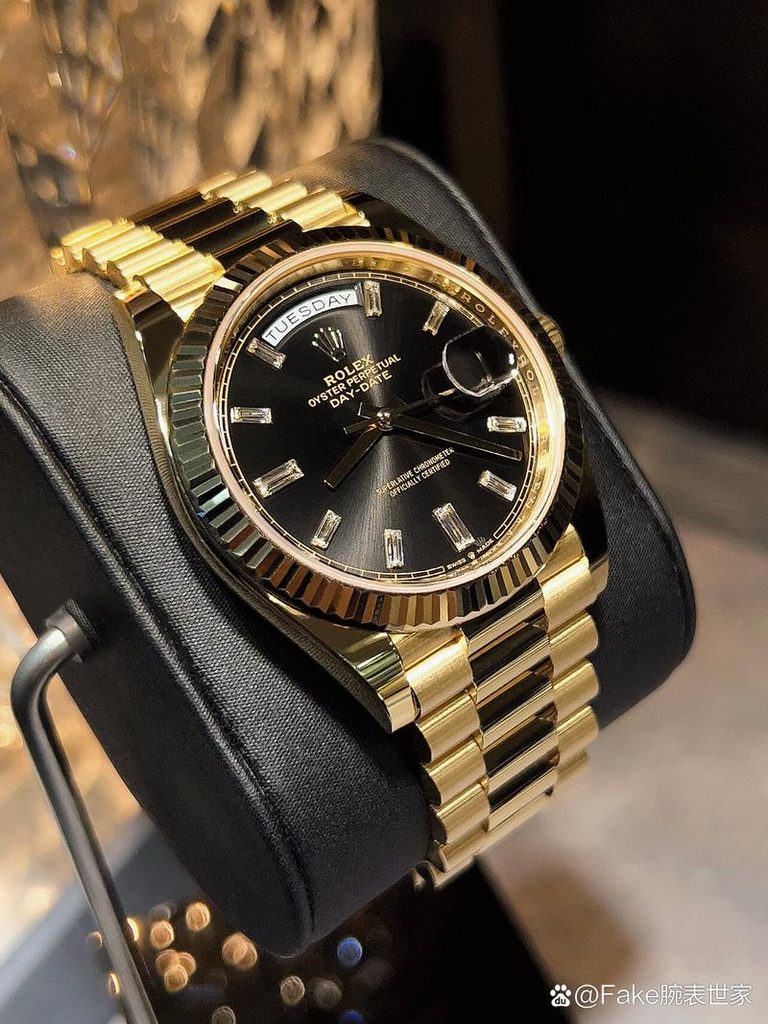
When it was launched in 1956, the Day-Date was a major innovation: it was the first calendar replica watch to display the day of the week in a curved window at 12 o’clock on the dial in addition to the date, a technical feat at the time. Made entirely of precious metals – 18-carat yellow gold, white gold, stellar gold, or 950 platinum – and fitted with the iconic Presidential strap, its multiple dials make it the ideal canvas for self-expression.
Although the days are the same no matter where you are, they are written differently due to language differences. Day-Date uses most writing systems – Latin, Arabic, Cyrillic, Hebrew, Japanese, Chinese ideograms, and even the Ge’ez alphabet used in the Horn of Africa – to express the wearer’s cultural identity. Available in 26 languages, it is a truly global, universal and personalized watch.
When midnight falls, the date and day of the week change simultaneously in their respective windows on the dial. This feat of watchmaking, the “miracle of midnight”, relies on a disc mechanism. It results from years of research: from 1950 to 1955, Rolex registered four patents for timepieces featuring the day and date.
In 1956, for the famous Oyster Perpetual Day-Date launch, Rolex created a three-piece chain presidential strap made only of 18-carat gold or 950 platinum, which is still exclusive to the Day-Date and the precious metal version of the Datejust.

Worn by many of the world’s politicians, directors and visionaries, the Day-Date is highly recognizable, especially for its iconic presidential bracelet, whose evocative name and the prominent figures who have worn it have ensured that the Day-Date is known as the “presidential watch.”